K9 Unit scores a ‘fur’fect 10!
22 February 2025
The Metro Police K9 Unit has welcomed 10 new four-legged recruits who are currently engaged in basic training. Read more below:
The Metro Police Department has taken delivery of 10 new K9 recruits this month, taking the overall number of four-legged officers to 20.
Among the existing dogs, six are fully operational and four are awaiting their work permits.
The new group is undergoing their basic training – four will qualify as copper and narcotic detection dogs, four will conduct general patrol duties and help apprehend suspects, while two others will search for missing persons/man trailing.
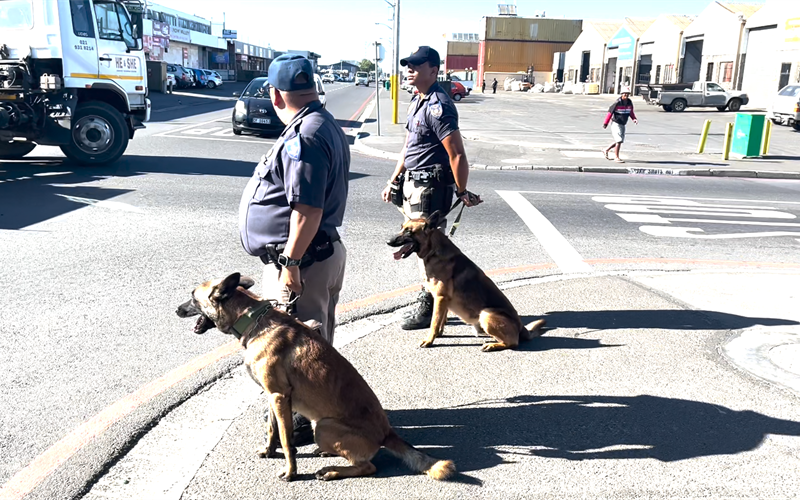 They are between the ages of one and two, and all of the dogs are Belgian Malinois', except the man trailing dogs. These are German Pointers.
'Our K9 unit is in its 16th year of operation, and is critical to our efforts to combat crime – specifically the illicit drug and firearm trade. The dogs are incredibly intelligent and their superior sense of smell has humbled hundreds of crafty criminals over the years. I'm very excited about the new arrivals, and the contribution that they will no doubt make towards a safer Cape Town. Four of them will train to have dual capabilities of detecting both narcotics and explosives - until now, K9 Jackson has been the only one to have this superpower, which will no doubt help improve the unit's operations,' said Mayoral Committee Member for Safety and Security, Alderman JP Smith.
THE PRACTICALITIES OF K9 BASIC TRAINING
In training, a method called ball drive is used. The dog is taught to imprint on a particular smell – drugs, copper, firearms, ammunition, explosives and human smell (for missing person cases) and find a hidden item.
When they succeed in their task, they are rewarded with a ball or toy they like, encouraging them to work hard for more reward.
When a K9 has developed good ball drive and is able to successfully sniff out whatever he/she imprinted on, they are ready for operations if their work drive is also up to scratch.
Also critical to training is establishing a bond between the handler and the K9, and learning how to communicate with each other, whether it is verbally or with non-verbal cues. This training takes between three and six months, dependent on the imprinting and bonding phase.
During their training period, the K9s are also exposed to busy and noisy areas, like CBDs, to minimise the risk of distraction in the operational environment.
Published by:
City of Cape Town, Media Office